🏹 The History and Symbolism of Yabusame
Yabusame, the ancient Japanese art of horseback archery, is one of the most striking and culturally significant traditions in Japan. Combining martial skill, spiritual ritual, and deep symbolism, it represents far more than a display of athletic ability. It is a living link to the values, discipline, and worldview of the samurai.
Understanding the history and symbolism of Yabusame allows us to appreciate not only its beauty, but its deeper purpose.
🌿 Origins in the Samurai Tradition
The roots of Yabusame can be traced back over 800 years, to the rise of the samurai during Japan’s feudal period. As mounted warriors, samurai required exceptional skill in horsemanship and archery. These abilities were essential on the battlefield, where mobility and accuracy determined survival.
The formalised practice of Yabusame is often associated with Minamoto no Yoritomo, the founder of the Kamakura shogunate in the late 12th century. He encouraged horseback archery training not only to strengthen military readiness, but also to cultivate discipline, focus, and moral character among his warriors.
Over time, Yabusame evolved from battlefield training into a ceremonial and spiritual practice.
🏯 From Warfare to Ritual
As Japan entered more stable periods, Yabusame became closely connected to Shinto ritual and court ceremony. Performances were conducted at shrines and important events, often as prayers for:
- Peace and prosperity
- Good harvests
- Protection from disaster
- National stability
Archers would dedicate their performance to the kami, the spiritual forces believed to inhabit nature.
This transformation gave Yabusame a sacred dimension that continues today.


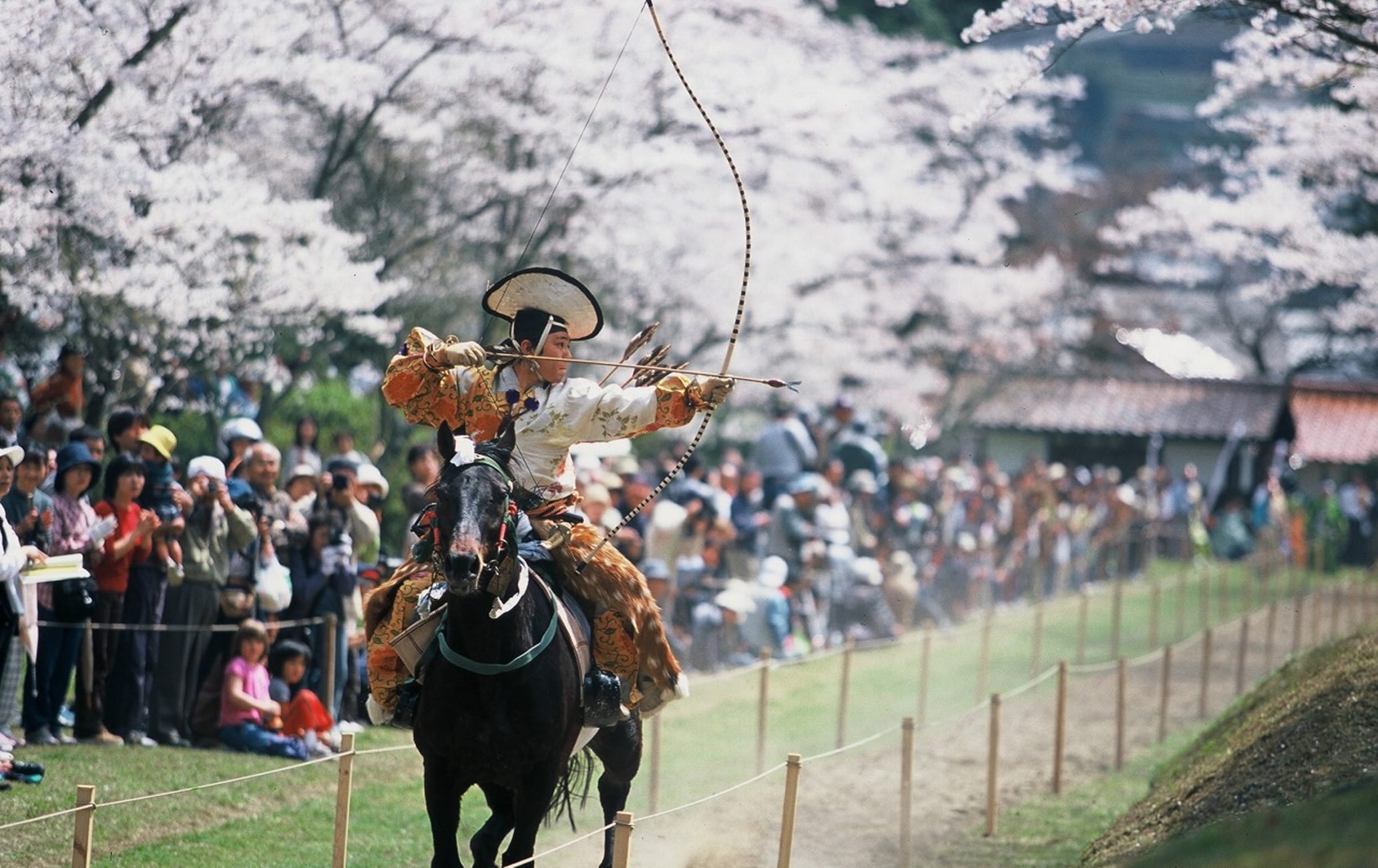
🧠 Symbolism in Movement and Practice
Every aspect of Yabusame carries symbolic meaning.
The Horse
The horse represents:
- Power
- Movement
- Partnership
- Harmony between human and nature
The relationship between rider and horse reflects cooperation rather than domination.
The Bow and Arrow
The bow symbolises:
- Focus and clarity
- Discipline and control
- The connection between intention and action
The arrow represents purpose. Once released, it cannot be recalled, reminding the practitioner to act with awareness and responsibility.
The Targets
Traditionally, the archer rides along a straight path and shoots at multiple targets. These targets symbolise:
- Obstacles in life
- Challenges on the path
- The need for concentration and commitment
Success is not measured only by accuracy, but by composure and presence.
🌸 Clothing and Ceremony
The clothing worn in Yabusame is carefully preserved from historical designs. Each garment reflects:
- Samurai heritage
- Ritual purity
- Cultural identity
The ceremonial nature of the performance emphasises respect, humility, and tradition.
🥋 Yabusame as a Path of Personal Development
Although rooted in warfare, modern Yabusame focuses on self-improvement. The practitioner develops:
- Awareness
- Discipline
- Emotional control
- Harmony with the environment
- Respect for history and culture
It is a form of moving meditation, combining physical and mental training.
🌍 Yabusame in the Modern World
Today, Yabusame continues to be performed in Japan at festivals and ceremonies. It also attracts growing international interest as people seek deeper cultural and philosophical understanding.
Through the work of organisations and practitioners worldwide, this tradition is being preserved and adapted responsibly.
At Mizuchi Kan and through Yabusame in the UK, we aim to honour this heritage while making its lessons accessible to modern society.
✨ Final Reflection
Yabusame is not simply about hitting a target.
It is about:
- Balance in movement
- Calm in pressure
- Respect for tradition
- Harmony with nature
- Awareness of intention
It is a bridge between past and present, guiding practitioners toward clarity, discipline, and purpose.