In traditional Japanese martial arts, physical technique is only one part of the path. Beneath every movement lies something deeper: the state of the heart and mind. This is known as Kokoro (心), a concept that sits at the centre of Yabusame and many classical Budo traditions.
While often translated simply as “heart” or “mind,” Kokoro represents a unity of emotion, intention, and awareness. It is the inner state from which all action arises.
Without Kokoro, technique becomes mechanical. With it, practice becomes meaningful.
🌿 What Is Kokoro?
Kokoro cannot be easily translated into English. It includes:
- Heart
- Mind
- Spirit
- Emotional awareness
- Intention
- Character
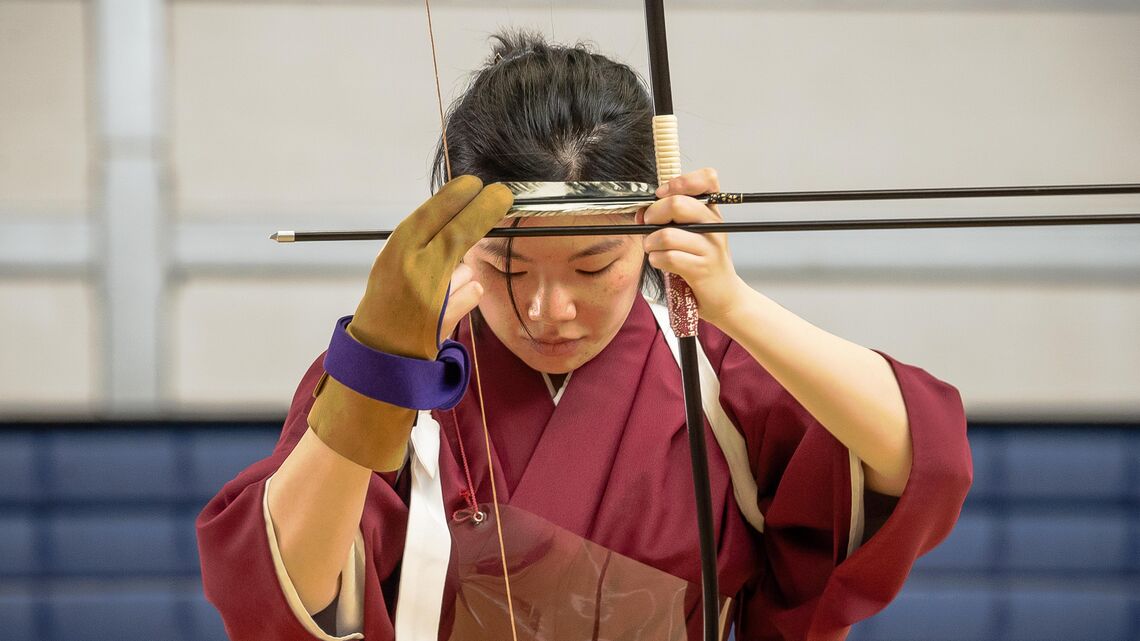
In Yabusame, Kokoro reflects the practitioner’s true nature. It is not something that can be hidden. In moments of pressure, one’s inner state becomes visible through movement, posture, and behaviour.
The way the arrow is released reveals the condition of the heart.
🏇 Kokoro in Practice
During Yabusame, the rider must maintain balance, focus, and composure while moving at speed. Yet beyond technique, the most important factor is the inner mindset.
The practitioner trains to develop:
- Calmness in uncertainty
- Clarity of intention
- Freedom from fear and ego
- Compassion and respect
- Awareness of the present moment
The target is not only external. It is also internal.


🧠 The Psychological Dimension
Kokoro has profound psychological relevance. It teaches practitioners to:
- Recognise their emotional state
- Control impulsive reactions
- Act with purpose rather than distraction
- Remain stable under pressure
In modern society, many people are overwhelmed by stress, distraction, and constant change. Training the Kokoro helps develop resilience and emotional balance.
This is especially valuable for young people navigating an uncertain world.
🌸 The Ethical Foundation
Traditional martial arts emphasise that strength must be guided by compassion. Kokoro includes:
- Responsibility
- Integrity
- Humility
- Empathy
In Yabusame, the practitioner is not seeking domination or victory. Instead, they aim for harmony and self-improvement.
The ultimate opponent is not another person, but one’s own fear, anger, and doubt.
🥋 Beyond the Dojo
The principle of Kokoro extends into daily life. It encourages:
- Thoughtful communication
- Patience in challenges
- Courage in adversity
- Care for others
- Ethical decision-making
This is why traditional martial arts have long been used as a method of education and character development.
🌍 Kokoro in the Modern World
At Mizuchi Kan and through the development of Yabusame in the UK, we seek to preserve this deeper purpose. Training is not only about archery or horsemanship. It is about cultivating strong and compassionate individuals.
As technology and society change rapidly, these timeless principles remain relevant. They offer stability, clarity, and meaning.
✨ Final Reflection
The arrow follows the hand.
The hand follows the mind.
The mind follows the heart.
This is Kokoro.
The true target is within.