🏹 Equipment and Traditional Clothing in Yabusame
Yabusame, is the ceremony, the essence of the ancient Japanese art of horseback archery, is known not only for its skill and symbolism but also for its distinctive equipment and ceremonial clothing. Each item used in this practice reflects centuries of refinement, combining practicality, aesthetics, and cultural meaning.
Understanding the equipment and clothing of Yabusame allows us to appreciate the depth of this tradition and the harmony between function, discipline, and ritual.
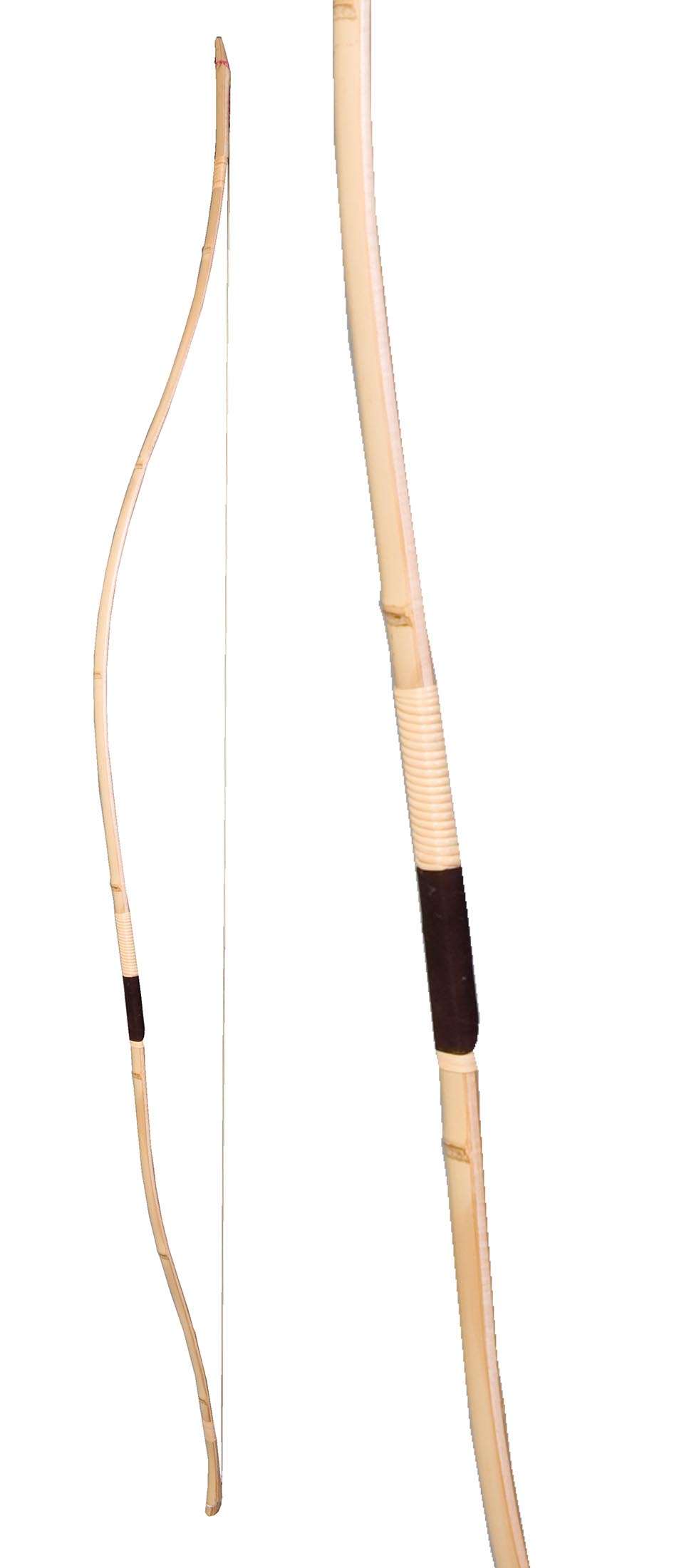
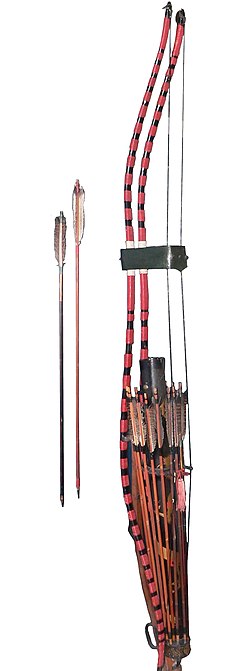
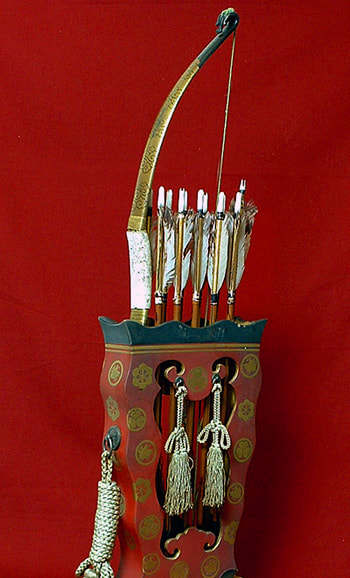
🌿 Shigeto no Yumi – (Heavy rattan-wrapped bows) used by Senior practitioners.
The bow used in Yabusame is known as the Yumi. Unlike most bows in the world, it is long and asymmetrical, with the grip positioned below the centre.
Key Features
- Asymmetrical design: This allows the bow to be used effectively on horseback without striking the horse.
- Length and flexibility: The long structure provides power and stability.
- Traditional materials: Historically made from bamboo, wood, and natural fibres.
The Yumi symbolises balance, patience, and the connection between strength and control.
🏹 Arrows – Jindoya
The arrows used in Yabusame are called Jindoya. They are longer and heavier than those used in many modern archery disciplines and are whistling arrows without iron arrowheads.
Traditional Characteristics
- Made from bamboo
- Feathered with eagle or hawk feathers
- Designed for stability during fast movement
Different arrow types may be used depending on the purpose of the demonstration or ceremony.
The reason iron points are not attached is because Yabusame is a sacred Shinto ritual, and as such bloodshed is to be avoided.
The arrow represents intention. Once released, it cannot be recalled, reminding practitioners to act with awareness and responsibility.
🎯 Targets – Mato
The targets in Yabusame are traditionally wooden and positioned along a straight riding path.
They symbolise:
- Obstacles and challenges
- Focus and clarity
- The journey of life
Breaking the target is often seen as a sign of commitment and presence rather than simply accuracy.
🏇 Saddles and Horse Equipment
The saddle used in Yabusame is based on traditional samurai riding equipment. It provides stability and allows the rider to maintain posture while drawing and releasing the bow.
Other elements include:
- Specialised stirrups
- Reins designed for control without excessive tension
- Equipment adapted for balance and harmony
The goal is not domination of the horse but cooperation.
🌸 Traditional Clothing
The clothing worn in Yabusame is inspired by samurai ceremonial dress. It is designed to allow movement while preserving historical authenticity.


Key Elements
Hitatare
A traditional garment worn by samurai, featuring wide sleeves and structured design. It allows freedom of movement while maintaining a dignified appearance.
Hakuma
Trousers adapted for riding and flexibility.
Gloves (Yugake)
Protect the hand and support consistent release.
Headwear
Often includes traditional hats or head coverings, reflecting both practicality and ceremonial identity.
🧠 Symbolism in Equipment and Dress
Every item carries deeper meaning:
- Respect for tradition
- Connection to history
- Discipline and responsibility
- Awareness of one’s role
The practitioner does not simply use equipment. They become part of a lineage.
🌍 Preserving Tradition in the Modern World
Today, authentic Yabusame equipment is still crafted using traditional methods in Japan. At the same time, modern practitioners must balance safety, accessibility, and responsible training.
At Mizuchi Kan and through the development of Yabusame in the UK, we aim to preserve authenticity while making this tradition accessible to new generations.
✨ Final Reflection
The bow, the arrow, the clothing, and the horse are not separate.
They form a unified expression of discipline, respect, and harmony.
This is the essence of Yabusame.