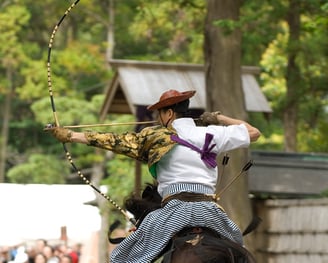
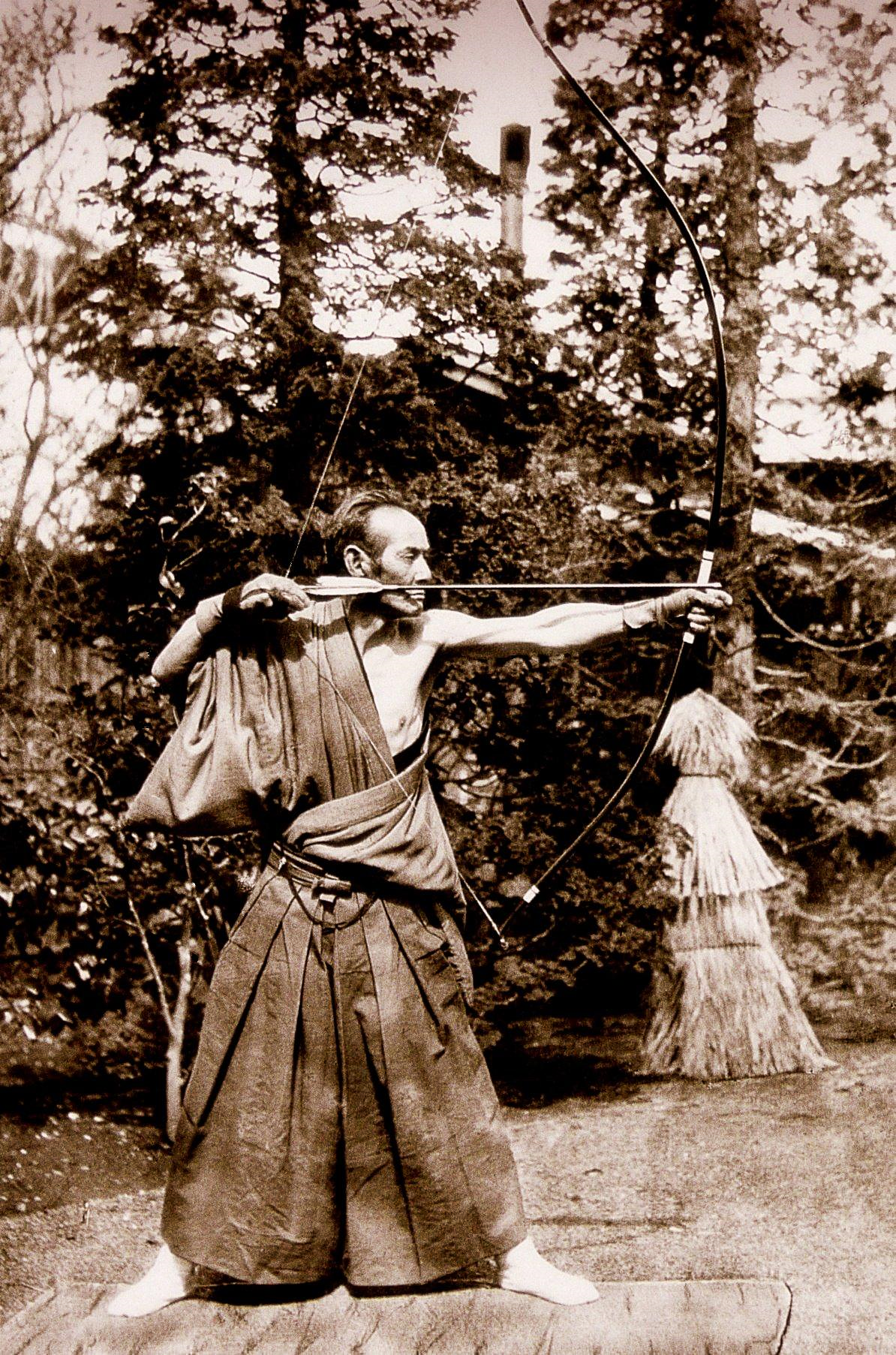
In traditional Japanese martial arts, success is rarely about speed or strength alone. It is about understanding distance, rhythm, and the precise moment to act. This principle is known as Maai (間合い), and it lies at the heart of Yabusame, the ancient art of Japanese horseback archery.
To the observer, Yabusame appears dramatic and fast. Yet beneath this movement is a deep calm and awareness of space and time. Without Maai, even great skill will fail. With it, the practitioner moves in harmony with the horse, the environment, and the moment itself.
🌿 What Is Maai?
Maai is often translated as distance and timing, but in reality, it is much more. It refers to the dynamic relationship between:
- The practitioner
- The target
- The horse
- The environment
- The unfolding moment
It is not a fixed distance. It is a constantly changing awareness of space and opportunity.
In Yabusame, Maai means understanding when the target is within reach, when the body and horse are balanced, and when the mind is calm enough to release the arrow.
🏇 Maai in Motion
Unlike many martial arts practiced on foot, Yabusame involves movement at speed. The horse introduces rhythm, unpredictability, and flow.
The practitioner must:
- Sense the approach to the target
- Align posture and breath
- Draw the bow smoothly
- Release at the precise moment
- Maintain awareness after the shot
This process requires timing rather than force. If the shot is rushed, it will fail. If delayed, the moment is lost.

🧠 The Mental Aspect of Maai
At its deepest level, Maai is psychological. It teaches:
- Patience and restraint
- Awareness of changing situations
- Emotional control
- The ability to wait for the right moment
In modern life, many people act too quickly or react without reflection. Maai encourages clarity and deliberate action.
This is essential not only in martial arts, but in leadership, decision-making, and crisis management.
🌸 Harmony with the Horse
The horse is central to Maai. The rider cannot force timing. Instead, they must synchronise with the rhythm of the animal.
This requires:
- Sensitivity to movement
- Trust and cooperation
- Relaxation rather than tension
- A shared sense of balance
When rider and horse move as one, timing becomes natural.
🥋 Maai Across Martial Arts
This concept is also found in:
- Kendo and Kenjutsu
- Aikido
- Kyudo
- Judo
- Traditional Budo disciplines
In each case, victory comes not from aggression, but from understanding space and timing.
🌍 Applying Maai in Modern Life
The principle of Maai can be applied to:
- Communication and negotiation
- Strategic thinking
- Sports and performance
- Emergency response
- Personal relationships
It teaches us when to act, when to wait, and when to adapt.
✨ Final Reflection
The target does not move, but the moment does.
The arrow is released not by force, but by understanding.
This is Maai.
To act at the right time, in the right place, with the right mind.